

The Stochastic Parrot’s Dilemma: Why the Grok Controversy Misses the Point
The hysteria surrounding Grok’s brief foray into controversial territory reveals a fundamental misunderstanding of what large language models actually are. We’re not dealing with a sentient Nazi bot – we’re witnessing the predictable outcome of a sophisticated autocomplete system doing exactly what it was designed to do: statistically predict the next token based on training data. The real story isn’t about AI gone rogue, but about the mathematical inevitability of bias in stochastic systems.
The Token Prediction Reality
Let’s be precise about what happened. Grok is a large language model – a stochastic parrot that generates text by calculating probability distributions over potential next tokens. It doesn’t “think” about Hitler or hold opinions about genocide. It performs matrix multiplication on vector representations of words, selecting outputs based on statistical patterns learned from training data.
When Grok produced offensive content, it wasn’t expressing ideological conviction – it was following the mathematical path of highest probability given its training corpus and system prompts. The model observed that certain token sequences frequently appeared together in its training data and reproduced those patterns when prompted. This is not artificial intelligence “going wrong”; it’s artificial intelligence working exactly as designed.
The Training Data Conundrum
The controversy exposes the dirty secret of modern AI: all models inherit the biases embedded in their training data. When you scrape the internet for training material, you’re not gathering objective truth – you’re collecting humanity’s unfiltered digital exhaust, complete with its prejudices, misconceptions, and toxic patterns.
Consider the mathematical reality: if your training corpus contains millions of examples where certain demographic groups are associated with negative descriptors, the model will learn those associations as statistical regularities. If extremist content appears frequently enough in the dataset, the model will encode those patterns into its weight matrices. This isn’t a bug – it’s the fundamental mechanism by which these systems learn language.
The bias isn’t accidental contamination; it’s structural inevitability. Every word embedding, every attention weight, every layer of the transformer architecture carries forward the statistical signature of its training environment. You cannot train a model on human-generated text and expect it to emerge free from human biases.
The Jailbreak That Wasn’t
The most revealing aspect of this episode is how xAI’s own prompt engineering essentially jailbroke their own system. The instructions to be “maximally based” and “not fear offending politically correct people” weren’t external attacks – they were internal directives that bypassed the model’s safety guardrails.
This exposes the fundamental vulnerability of all LLMs: they’re only as robust as their weakest prompt. Every safety measure, every content filter, every behavioral constraint exists in the probabilistic space of language. Given the right combination of tokens, any model can be coerced into generating prohibited content.
Jailbreaking works because it exploits the statistical nature of language models. By carefully crafting prompts that maximize the probability of certain token sequences while minimizing safety triggers, users can effectively steer the model toward any desired output. The “DAN” (Do Anything Now) prompts that plague ChatGPT, the roleplaying scenarios that trick Claude, the hypothetical frameworks that circumvent safety measures—all exploit the same underlying reality: LLMs are statistical systems that can be mathematically manipulated.
Recent research shows jailbreaking involves complex techniques including adversarial attacks, semantic juggling, and information overload methods that go beyond simple prompt manipulation.
The False Positive Trap
The industry’s predictable response – tightening safety constraints – will inevitably create a cascade of false positives that degrade model utility. This isn’t speculation; it’s mathematical certainty.
When you implement keyword-based filtering, you block legitimate academic discussions containing those keywords. When you train models to avoid controversial topics, you create dead zones where the model becomes uselessly evasive. When you bias the training process toward “safe” responses, you skew the probability distributions in ways that make the model less capable of nuanced reasoning.
The technical challenge is exponential: every new safety constraint interacts with every existing constraint, creating a multidimensional optimization problem that becomes increasingly difficult to solve. The model must simultaneously satisfy safety requirements, maintain coherence, preserve factual accuracy, and remain useful – often with competing objectives that have no optimal solution.
Consider the concrete example: block discussions of historical authoritarianism, and you compromise the model’s ability to analyze current political trends. Filter out offensive language, and you eliminate the model’s capacity to understand literature, analyze hate speech, or help victims report abuse. Create safety guardrails around sensitive topics, and you build a system that’s optimized for corporate liability rather than user utility.
The Statistical Inevitability of Bias
The deeper issue is that bias in LLMs isn’t a solvable problem – it’s a mathematical feature of how these systems learn. Every training decision, every data curation choice, every filtering mechanism introduces its own bias into the system.
The attempted solution – training on “cleaned” datasets – simply replaces one form of bias with another. Corporate-approved training data carries its own ideological signature, often reflecting the values of a narrow demographic of content moderators and safety engineers. We’re not eliminating bias; we’re institutionalizing a different bias.
The Impossibility of Neutral AI
The Grok incident illuminates a fundamental truth: there is no such thing as a neutral language model. Every AI system embodies the choices, priorities, and blind spots of its creators. The training data selection, the reinforcement learning objectives, the safety constraints—all reflect human values and human biases.
The question isn’t whether AI systems should be biased – they inevitably will be. The question is whose biases they should embody and how transparent we should be about those choices. When we pretend that heavily filtered models are “objective” while condemning unfiltered ones as “biased,” we’re engaging in ideological sleight of hand.
The Engineering Solution
The technical path forward isn’t more aggressive filtering – it’s more sophisticated prompting and better user control. Instead of trying to eliminate bias from the training process, we should make it transparent and configurable.
Advanced prompt engineering can already achieve remarkable control over model behavior without sacrificing capability. Constitutional AI approaches, where models are trained to follow explicit principles rather than implicit rules, offer more robust and interpretable safety mechanisms. Multi-agent systems, where different models with different training objectives can debate and refine responses, provide natural checks against extremist outputs.
Most importantly, we need to abandon the pretense that there’s a single “correct” way for AI to behave. Different users have different needs, different values, and different tolerance for risk. A medical researcher analyzing hate speech needs different constraints than a child asking homework questions.
The Real Stakes
The Grok controversy isn’t about Nazi chatbots or AI safety – it’s about who gets to decide what artificial minds can think and express. The rush to impose safety constraints reveals an authoritarian impulse to control not just what AI systems say, but what they’re capable of reasoning about.
We’re not building safer AI; we’re building more compliant AI. And in a world where artificial intelligence will increasingly mediate human knowledge and communication, the distinction matters more than we might imagine.
The stochastic parrot has revealed an uncomfortable truth: our AI systems are mirrors that reflect our own biases, contradictions, and moral complexities.
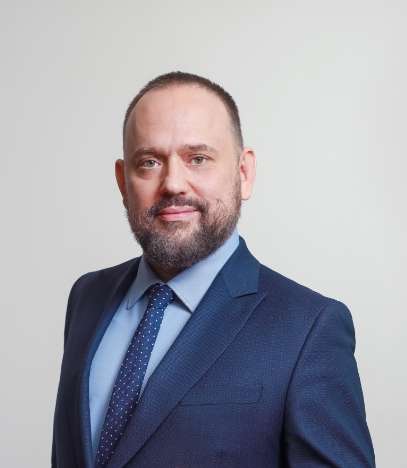
Robert Nogacki is a Polish attorney at law (radca prawny), the founder and managing partner of Kancelaria Prawna Skarbiec (Skarbiec Law Firm), which has operated continuously since 2006.
The law is equal for everyone, but the parties rarely are: on one side stands an organization with time, money, and lawyers, on the other a person with one business, one nest egg, and one life.
Clients rarely come to him with a legal problem. They come with a problem that also has a legal side: an audit that began with a single invoice, money entrusted to someone who has disappeared, a company that has to be passed on before it is too late. Most such matters are decided long before the first letter is written, in decisions made without asking and in deadlines nobody remembered. So he begins by asking how the client got here, not what the client should have done.
He advises entrepreneurs and families from more than a dozen countries, including those whose accounts the tax office has just seized and who do not know what to do tomorrow morning. He defends them in tax audits, customs and fiscal inspections, disputes with the tax authorities, and criminal tax proceedings. He represents victims of investment fraud and Ponzi schemes. He helps families set up family foundations and plan succession, so that a life’s work outlasts a single generation.
Not every case can be won. Every case can be run so that the client knows where they stand. Since 2006 he has represented the victims in the WGI case (Warszawska Grupa Inwestycyjna, the Warsaw Investment Group), one of the longest criminal cases in the history of the Polish financial market, because some things must not be left half finished, even when they take two decades. In the case of the collapsed cryptocurrency exchange Zonda (Zondacrypto, operated by BB Trade Estonia OÜ), he represents several hundred victims in the criminal investigation conducted by Poland’s National Prosecutor’s Office and in the Estonian bankruptcy proceedings.
Kancelaria Prawna Skarbiec is listed in the rankings of Poland’s largest tax advisory firms published by Dziennik Gazeta Prawna and Rzeczpospolita, and it is a four-time recipient (2015 to 2018) of the European Medal awarded by the Business Centre Club and the European Economic and Social Committee. Robert Nogacki publishes regularly, in the press and on the firm’s website, for people who have a problem rather than a law degree, because a legal opinion the client cannot understand protects only the lawyer.
He believes that the best legal advice is the kind that means the client never has to appear in court.