
Consciousness as a Quantum Phenomenon: The Mind’s Quantum Signature
Your brain weighs three pounds and runs on twenty watts p- less power than a lightbulb. Yet it generates something no computer can replicate: the feeling of being you. The redness of red. The ache of longing. The sudden flash of understanding when a joke clicks. Neuroscientists have mapped every circuit, catalogued every neurotransmitter, traced every electrical impulse racing between neurons. But they still can’t explain why any of this creates conscious experience. Why isn’t your brain just a biological computer processing information in the dark?
A growing number of researchers think they know why classical neuroscience has failed to crack consciousness. They’re looking in the wrong place. The secret isn’t in the electrical chatter between brain cells – it’s in the quantum realm inside them, where the strange laws of physics might create the stranger phenomenon of awareness itself.
When Physics Meets Mind
Consciousness shares an uncanny resemblance to quantum phenomena. Both involve subjective experience – quantum states remain indefinite until measured, just as consciousness represents pure subjectivity. Both involve the collapse of multiple possibilities into single realities. Both seem to transcend the boundaries of classical physics.
Roger Penrose, the Nobel Prize-winning mathematician, and Stuart Hameroff, an anesthesiologist who spends his days turning consciousness on and off, have proposed the most detailed quantum theory of consciousness. They call it Orchestrated Objective Reduction, or Orch OR.
Their radical claim: consciousness doesn’t emerge from the chatter between neurons. It emerges from quantum computers inside the neurons themselves.
These quantum computers are microtubules – protein structures that form the skeleton of every cell. In brain cells, these microtubules might function as biological quantum processors, maintaining quantum superpositions until they reach a critical threshold. At that moment, the quantum possibilities collapse into a single reality – a moment of conscious experience.
The Microtubule Discovery
Microtubules solve a practical problem that has plagued quantum consciousness theories. The brain is warm, wet, and chaotic – seemingly the worst possible environment for delicate quantum states. But microtubules exist in a protected environment within neurons, shielded from much of the cellular chaos.
These cylindrical protein structures form helical pathways that could preserve quantum coherence across timescales relevant to brain function. The proteins that compose them—tubulins – can exist in multiple states simultaneously, creating quantum bits within living tissue.
When these quantum states reach Penrose’s objective threshold – the point where spacetime curvature differences become significant – they collapse rapidly, generating discrete moments of awareness. Specialized proteins orchestrate this process, ensuring consciousness emerges not from random quantum noise but from precisely coordinated quantum computation.
Laboratory Proof
For decades, quantum consciousness theories remained elegant speculations without experimental support. Recent years have brought the first, though cautiously interpreted, evidence.
Researchers at Wellesley College performed a simple but thoughtful experiment. They gave rats epothilone B – a drug that stabilizes microtubules – then measured how long it took for isoflurane anesthesia to knock them unconscious.
The results were significant: rats with stabilized microtubules took substantially longer to lose their righting reflex, an indicator of consciousness in animals. This suggests that microtubules play an important role in how anesthetics work – consistent with quantum theory predictions.
However, the Wellesley study, while groundbreaking, has limitations. It doesn’t directly prove that microtubules generate consciousness, nor that the mechanism is quantum. It shows only that these structures influence how a specific anesthetic works.
Equally promising but controversial are studies from Trinity College Dublin. The team developed an MRI protocol that allegedly detects signals consistent with entanglement between proton spins and EEG-like rhythms in awake volunteers. If confirmed, this would be the first direct evidence of quantum effects in the living brain.
Yet the Dublin findings’ interpretation has been challenged by other scientists, and so far no independent team has reproduced the discovery. In science, especially regarding such revolutionary claims, replication is crucial.
These preliminary findings, while encouraging for quantum theory proponents, require further confirmation. Quantum consciousness science stands at a threshold – between promising signals and definitive proof.
Nature’s Quantum Tricks
Biology might be using quantum mechanics for millions of years. Photosynthesis relies on quantum coherence to achieve nearly perfect energy conversion. Plants use quantum superposition to let energy explore multiple pathways simultaneously, choosing the most efficient route.
Migrating birds navigate using quantum entanglement in proteins that detect Earth’s magnetic field. Enzymes use quantum tunneling to accelerate chemical reactions throughout the body.
Life doesn’t just tolerate quantum effects – it exploits them. The brain, as evolution’s most complex creation, would be perfectly positioned to harness quantum mechanics for consciousness itself.
The Skeptics Fight Back
Not everyone buys the quantum consciousness story. The main criticism centers on decoherence – the rapid destruction of quantum states by environmental interference.
Max Tegmark, a respected physicist, calculated that quantum coherence in the brain would last only femtoseconds – far too brief to influence neural processes that unfold over milliseconds. His calculations suggested the brain operates as a purely classical system.
But new research suggests complex biological systems can preserve quantum coherence through mechanisms that classical physics struggles to explain. The discovery of room-temperature quantum effects in photosynthesis proved that biology has sophisticated ways of protecting quantum processes.
The criticism may also rest on outdated assumptions. Quantum consciousness theories don’t require massive quantum coherence throughout the brain – just quantum processes at key locations that influence neural activity in ways that accumulate into conscious experience.
Solving the Unity Problem
Quantum consciousness offers an elegant solution to one of neuroscience’s hardest problems: how does the brain bind separate processes into unified experience? Why do we see a complete visual scene rather than fragments of color, motion, and form processed by different brain regions?
Classical theories struggle with this binding problem. But if microtubules across different brain regions become quantum entangled, they could instantly coordinate their activity, creating the neural synchrony needed for unified conscious experience. Quantum entanglement could explain how the brain integrates information across vast networks to create coherent perception.
What It Means for Free Will
If consciousness operates through quantum processes, it suggests mental activity is fundamentally non-computable. Human thinking might not reduce to algorithmic computation- it might involve genuine quantum indeterminacy.
This could provide a physical basis for free will. Instead of being deterministic machines, our brains might make decisions through quantum processes that could create a space for genuine non causality in our choices. Creativity, insight, and the spark of human understanding might emerge from quantum computation that no classical computer could replicate.
The Gateway Between Worlds
If consciousness operates through quantum mechanisms, we may be approaching something far more profound than mere neuroscience. Quantum mechanics reveals a universe where observation shapes reality, where particles exist in multiple states simultaneously, and where distant objects remain mysteriously connected through entanglement. These same properties that govern atomic behavior might serve as a bridge between the material brain and dimensions of experience that transcend physical matter.
The quantum field that some researchers propose underlies consciousness could represent more than biological computation – it might constitute an interface between the corporeal vessel of the body and spiritual essences not bound by the laws of classical physics. In this view, the brain becomes not the generator of consciousness, but rather a quantum antenna, tuning into frequencies of awareness that originate beyond the material realm.
This possibility transforms our understanding of human nature itself. Rather than consciousness emerging from matter, quantum processes might allow consciousness – perhaps eternal, perhaps connected to a universal field of awareness – to inhabit and animate physical form. The microtubules that Penrose and Hameroff identify as quantum computers could be the very mechanisms through which the soul interfaces with flesh, where the eternal touches the temporal.
Such a framework offers profound implications for questions that have haunted humanity across cultures and centuries: the nature of the soul, the possibility of consciousness surviving bodily death, and our connection to transcendent reality. If consciousness operates as a quantum phenomenon, the boundaries between self and cosmos, between individual awareness and universal consciousness, may be far more permeable than materialist science has assumed.
The AI Question
Quantum consciousness research raises profound questions about artificial intelligence. If consciousness requires quantum processes, classical computers might never achieve genuine awareness, no matter how sophisticated their programming.
True artificial consciousness might require quantum computers that can implement the quantum processes generating subjective experience. This suggests the path to conscious AI runs through quantum computing rather than classical neural networks.
But this raises ethical concerns about creating genuinely aware machines. If consciousness is quantum mechanical, building conscious AI means building systems that might genuinely suffer or experience joy.
What Comes Next
The field stands at a crossroads. Advanced experimental techniques are making it possible to test quantum consciousness theories with unprecedented precision. Researchers are designing experiments to detect quantum entanglement in human brains, monitor quantum processes in microtubules in real-time, and test whether quantum effects influence neural activity.
These experiments will likely determine whether consciousness truly operates through quantum mechanisms or emerges from classical neural processes. The answer will reshape our understanding of human nature and guide new approaches to treating consciousness disorders.
The Quantum Mind
The quantum consciousness hypothesis represents one of the most ambitious theories in contemporary science. While proof remains incomplete, mounting evidence suggests the quantum realm may hold the key to understanding awareness.
This research pushes the boundaries of physics, neuroscience, and philosophy simultaneously. It demonstrates how the deepest questions about mind and matter remain connected in ways we’re only beginning to understand.
We may be approaching a new understanding of consciousness – one that reveals the mind operates according to the same quantum principles that govern atoms and molecules. If true, it means every thought, every moment of awareness, every flash of insight emerges from the strange, beautiful quantum processes that shape reality at its most fundamental level.
The brain, it turns out, might be nature’s most sophisticated quantum computer – generating the miracle of human consciousness from the quantum mechanical dance of matter and energy in the theater of the mind.
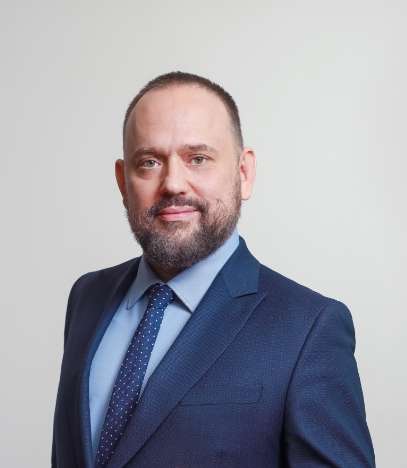
Robert Nogacki is a Polish attorney at law (radca prawny), the founder and managing partner of Kancelaria Prawna Skarbiec (Skarbiec Law Firm), which has operated continuously since 2006.
The law is equal for everyone, but the parties rarely are: on one side stands an organization with time, money, and lawyers, on the other a person with one business, one nest egg, and one life.
Clients rarely come to him with a legal problem. They come with a problem that also has a legal side: an audit that began with a single invoice, money entrusted to someone who has disappeared, a company that has to be passed on before it is too late. Most such matters are decided long before the first letter is written, in decisions made without asking and in deadlines nobody remembered. So he begins by asking how the client got here, not what the client should have done.
He advises entrepreneurs and families from more than a dozen countries, including those whose accounts the tax office has just seized and who do not know what to do tomorrow morning. He defends them in tax audits, customs and fiscal inspections, disputes with the tax authorities, and criminal tax proceedings. He represents victims of investment fraud and Ponzi schemes. He helps families set up family foundations and plan succession, so that a life’s work outlasts a single generation.
Not every case can be won. Every case can be run so that the client knows where they stand. Since 2006 he has represented the victims in the WGI case (Warszawska Grupa Inwestycyjna, the Warsaw Investment Group), one of the longest criminal cases in the history of the Polish financial market, because some things must not be left half finished, even when they take two decades. In the case of the collapsed cryptocurrency exchange Zonda (Zondacrypto, operated by BB Trade Estonia OÜ), he represents several hundred victims in the criminal investigation conducted by Poland’s National Prosecutor’s Office and in the Estonian bankruptcy proceedings.
Kancelaria Prawna Skarbiec is listed in the rankings of Poland’s largest tax advisory firms published by Dziennik Gazeta Prawna and Rzeczpospolita, and it is a four-time recipient (2015 to 2018) of the European Medal awarded by the Business Centre Club and the European Economic and Social Committee. Robert Nogacki publishes regularly, in the press and on the firm’s website, for people who have a problem rather than a law degree, because a legal opinion the client cannot understand protects only the lawyer.
He believes that the best legal advice is the kind that means the client never has to appear in court.