The Futility of Far-Future Forecasting: A Critique of 21st Century Singularity Predictions
In a world captivated by technological advancement, there exists a peculiar obsession with predicting exactly when machines will surpass human intelligence. The latest wave of prognostications suggests the singularity might arrive within a year, while others more conservatively aim for 2040, 2060, or somewhere before the century’s end. These predictions share one common trait: an unwarranted certainty about events decades away, despite history repeatedly showing how spectacularly wrong such long-term forecasts tend to be.
Consider the technological predictions made in the 1940s about the 2020s. Where are our personal nuclear reactors, the colonies on Mars, or the flying cars that populated the imagination of futurists? Instead, we received smartphones and social media – innovations nobody foresaw because the foundational technologies enabling them hadn’t been conceived yet.
The singularity predictions suffer from several critical blind spots. First is the assumption that intelligence develops linearly along a single axis where machines can simply accumulate more “processing power” until they surpass humans. This fundamentally misunderstands intelligence as a multidimensional concept encompassing not just calculation speed but emotional intelligence, creativity, physical embodiment, and social cognition – qualities developed through evolutionary pressure absent in machine learning systems.
Moore’s Law, cited religiously by singularity proponents, has already begun faltering as we approach the physical limits of silicon. Quantum computing, while promising, faces enormous engineering challenges that might take decades to solve, if they’re solvable at all. The path forward isn’t a smooth highway but a rocky terrain filled with unforeseen obstacles, breakthrough detours, and evolutionary dead ends.
The most amusing aspect of these predictions is their inherent contradiction: experts claiming to understand the developmental trajectory of superintelligent systems using intellects that would be, by definition, inferior to what they’re attempting to forecast. This is akin to a calculator predicting when humans will invent calculus – the conceptual frameworks needed to understand such leaps often can’t be grasped beforehand.
History teaches us that technological progress isn’t merely about raw computational power but about conceptual innovations that come from unexpected places. The internet wasn’t just faster telegraph networks; it represented an entirely new paradigm. Similarly, true machine intelligence, if it arrives, likely won’t be merely “human brains but faster” – it will be something we currently lack the vocabulary to describe.
So what can we responsibly say about the future? That change is indeed coming, but its exact form remains wonderfully unpredictable. While we should prepare for significant technological transformation, attaching specific dates to events decades away reveals more about human psychology – our desire for certainty in an uncertain world – than about technological reality.
The next revolutionary breakthrough likely lurks in an unexpected domain, developed by researchers working on problems seemingly unrelated to AI. And when it arrives, all our careful predictions will look as quaint as 1950s visions of robot butlers and atomic-powered vacuum cleaners appear to us today.
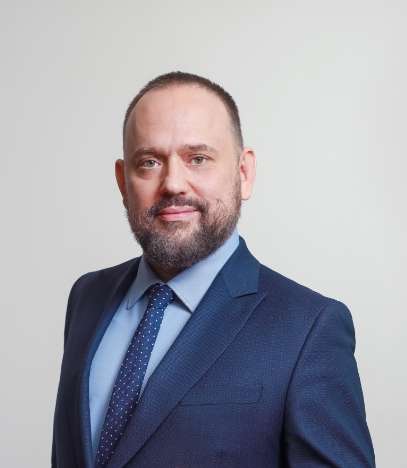
Robert Nogacki is a Polish attorney at law (radca prawny), the founder and managing partner of Kancelaria Prawna Skarbiec (Skarbiec Law Firm), which has operated continuously since 2006.
The law is equal for everyone, but the parties rarely are: on one side stands an organization with time, money, and lawyers, on the other a person with one business, one nest egg, and one life.
Clients rarely come to him with a legal problem. They come with a problem that also has a legal side: an audit that began with a single invoice, money entrusted to someone who has disappeared, a company that has to be passed on before it is too late. Most such matters are decided long before the first letter is written, in decisions made without asking and in deadlines nobody remembered. So he begins by asking how the client got here, not what the client should have done.
He advises entrepreneurs and families from more than a dozen countries, including those whose accounts the tax office has just seized and who do not know what to do tomorrow morning. He defends them in tax audits, customs and fiscal inspections, disputes with the tax authorities, and criminal tax proceedings. He represents victims of investment fraud and Ponzi schemes. He helps families set up family foundations and plan succession, so that a life’s work outlasts a single generation.
Not every case can be won. Every case can be run so that the client knows where they stand. Since 2006 he has represented the victims in the WGI case (Warszawska Grupa Inwestycyjna, the Warsaw Investment Group), one of the longest criminal cases in the history of the Polish financial market, because some things must not be left half finished, even when they take two decades. In the case of the collapsed cryptocurrency exchange Zonda (Zondacrypto, operated by BB Trade Estonia OÜ), he represents several hundred victims in the criminal investigation conducted by Poland’s National Prosecutor’s Office and in the Estonian bankruptcy proceedings.
Kancelaria Prawna Skarbiec is listed in the rankings of Poland’s largest tax advisory firms published by Dziennik Gazeta Prawna and Rzeczpospolita, and it is a four-time recipient (2015 to 2018) of the European Medal awarded by the Business Centre Club and the European Economic and Social Committee. Robert Nogacki publishes regularly, in the press and on the firm’s website, for people who have a problem rather than a law degree, because a legal opinion the client cannot understand protects only the lawyer.
He believes that the best legal advice is the kind that means the client never has to appear in court.