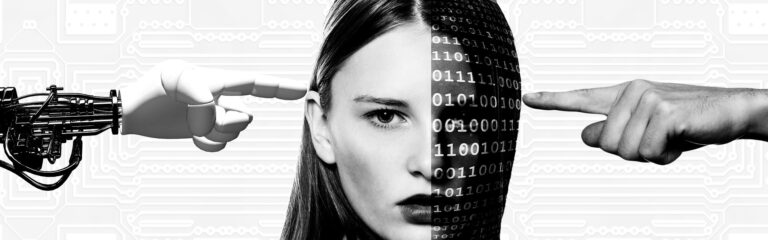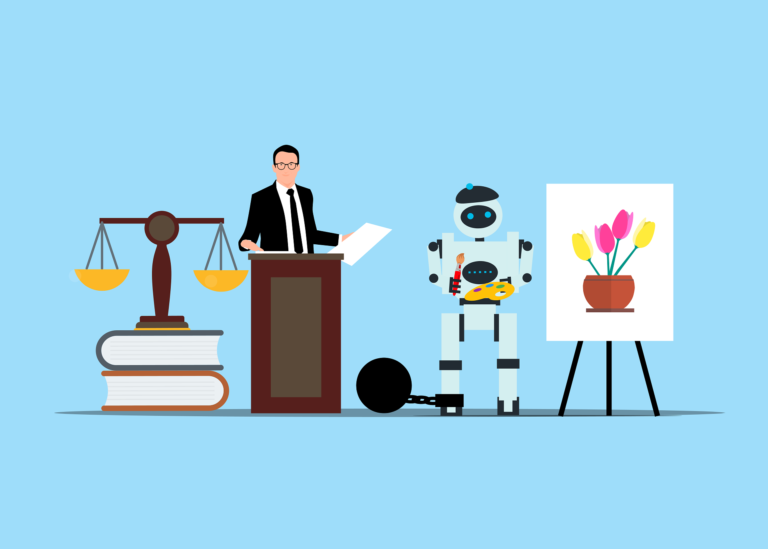
The Illusion of Mind: How We Anthropomorphize Artificial Intelligence
In our eagerness to herald technological progress, we’ve developed a peculiar habit of attributing human-like qualities to artificial intelligence systems. This anthropomorphization isn’t just a matter of casual metaphors – it represents a fundamental misunderstanding of what AI systems are and how they operate.
Drawing from John Searle’s seminal Chinese Room argument and extending to modern large language models, we can see how this misattribution of human qualities to AI systems obscures their true nature and limitations. Consider how we describe AI systems: they “think,” “understand,” “know,” “believe,” and even “hallucinate.” This vocabulary, borrowed from human cognition and consciousness, creates a false equivalence between artificial information processing and human mental states. When we say an AI system “understands” a text, we’re making the same category error that Searle identified in his Chinese Room thought experiment – mistaking symbol manipulation for genuine comprehension.
Modern language models, including those driving conversational AI, operate through statistical pattern matching and token prediction. They don’t “hallucinate” in any meaningful sense because hallucination implies a deviation from genuine perception or understanding. These systems don’t perceive or understand in the first place – they generate outputs based on statistical correlations in their training data. When an AI produces incorrect information, it’s not hallucinating; it’s simply generating tokens that don’t correspond to verified facts, but the process is fundamentally the same as when it generates accurate information.
The problem goes deeper than terminology. When we attribute “knowledge” to AI systems, we’re conflating two fundamentally different phenomena. Human knowledge involves grounded understanding connected to lived experience, sensory input, and a complex web of interconnected meanings. AI systems, by contrast, operate on what Searle would call pure syntax without semantics – they process symbols without any connection to real-world meaning or experience.
Consider the concept of “will” or intention. When we say an AI “wants” to help or “tries” to understand, we’re projecting human-like agency onto systems that fundamentally lack it. These systems don’t have goals or desires – they execute algorithms that optimize for certain mathematical outcomes. The appearance of purpose or intention is an emergent property of this optimization process, not a fundamental characteristic of the system.
This anthropomorphization has practical consequences. When we attribute human-like understanding to AI systems, we risk overestimating their capabilities and missing their fundamental limitations. A language model doesn’t “know” facts in the way humans do – it produces outputs that statistically correlate with patterns in its training data. It can’t verify information, learn from current interactions, or understand the implications of what it’s saying in any meaningful sense.
The symbolic grounding problem, which Searle’s Chinese Room illustrates, remains unsolved. Modern AI systems, despite their impressive capabilities, still operate in the realm of pure symbol manipulation. They don’t ground their symbols in real-world experience or meaning. When an AI system processes the word “apple,” it’s not connecting that symbol to the experience of seeing, touching, or tasting an apple – it’s processing it purely in terms of its statistical relationships to other symbols in its training data.
This isn’t to diminish the remarkable achievements in AI technology. These systems can perform complex tasks and generate highly sophisticated outputs. But we must understand them for what they are: powerful statistical engines for pattern matching and generation, not artificial minds with human-like understanding or consciousness.
The solution isn’t to stop using these systems but to develop more accurate ways of describing and thinking about them. Instead of saying an AI “understands” a topic, we might say it can process and generate text patterns related to that topic. Rather than saying it “knows” facts, we can say it can reproduce information from its training data with varying degrees of accuracy.
As we continue to develop and deploy AI systems, maintaining this clarity about their true nature becomes increasingly important. The anthropomorphic illusion is seductive – these systems are designed to produce outputs that seem human-like – but seeing through it is crucial for responsible development and use of AI technology.
Understanding AI systems as they truly are – sophisticated pattern matching and generation tools – rather than as artificial minds allows us to better appreciate both their capabilities and their limitations. It helps us avoid the trap of attributing human-like qualities to systems that operate in fundamentally different ways, while still recognizing their genuine utility and power as technological tools.
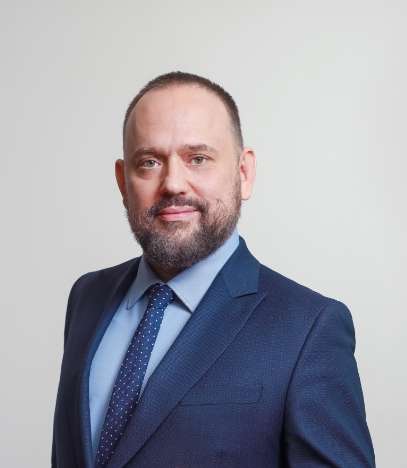
Robert Nogacki is a Polish attorney at law (radca prawny), the founder and managing partner of Kancelaria Prawna Skarbiec (Skarbiec Law Firm), which has operated continuously since 2006.
The law is equal for everyone, but the parties rarely are: on one side stands an organization with time, money, and lawyers, on the other a person with one business, one nest egg, and one life.
Clients rarely come to him with a legal problem. They come with a problem that also has a legal side: an audit that began with a single invoice, money entrusted to someone who has disappeared, a company that has to be passed on before it is too late. Most such matters are decided long before the first letter is written, in decisions made without asking and in deadlines nobody remembered. So he begins by asking how the client got here, not what the client should have done.
He advises entrepreneurs and families from more than a dozen countries, including those whose accounts the tax office has just seized and who do not know what to do tomorrow morning. He defends them in tax audits, customs and fiscal inspections, disputes with the tax authorities, and criminal tax proceedings. He represents victims of investment fraud and Ponzi schemes. He helps families set up family foundations and plan succession, so that a life’s work outlasts a single generation.
Not every case can be won. Every case can be run so that the client knows where they stand. Since 2006 he has represented the victims in the WGI case (Warszawska Grupa Inwestycyjna, the Warsaw Investment Group), one of the longest criminal cases in the history of the Polish financial market, because some things must not be left half finished, even when they take two decades. In the case of the collapsed cryptocurrency exchange Zonda (Zondacrypto, operated by BB Trade Estonia OÜ), he represents several hundred victims in the criminal investigation conducted by Poland’s National Prosecutor’s Office and in the Estonian bankruptcy proceedings.
Kancelaria Prawna Skarbiec is listed in the rankings of Poland’s largest tax advisory firms published by Dziennik Gazeta Prawna and Rzeczpospolita, and it is a four-time recipient (2015 to 2018) of the European Medal awarded by the Business Centre Club and the European Economic and Social Committee. Robert Nogacki publishes regularly, in the press and on the firm’s website, for people who have a problem rather than a law degree, because a legal opinion the client cannot understand protects only the lawyer.
He believes that the best legal advice is the kind that means the client never has to appear in court.